
Starlink Now Works Directly on Your Phone — No Dish, No Installation, Just Instant Coverage
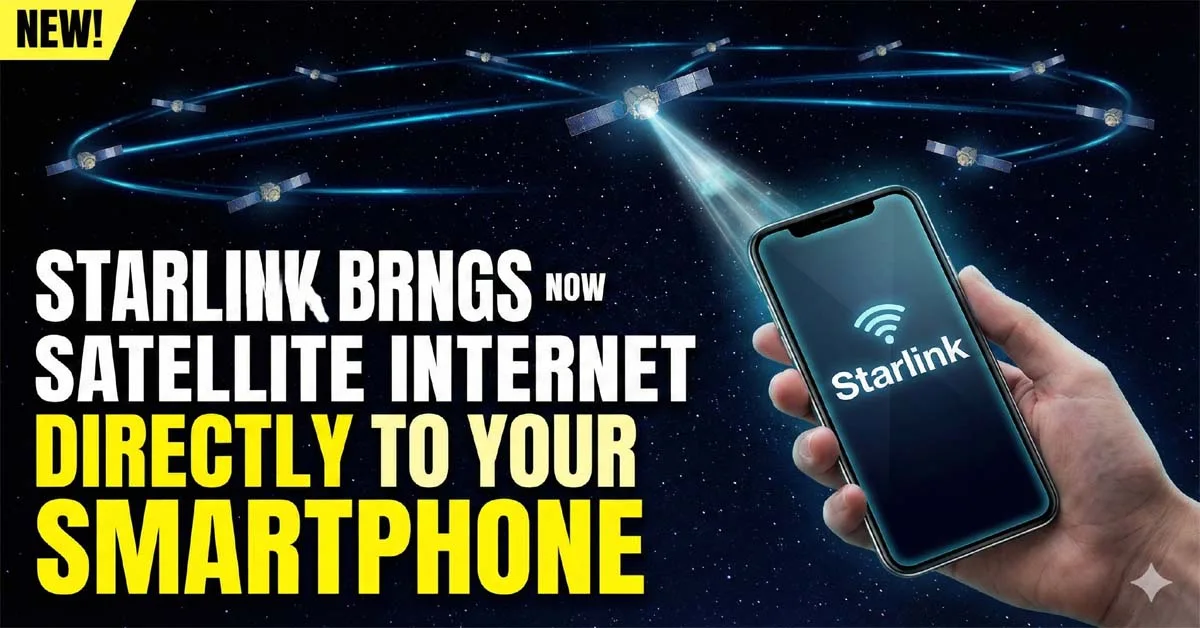
Starlink has quietly triggered a major shift in the telecom world. For years, satellite internet meant a dish on your roof, long cables, and a router humming in the corner. Now, the company is unlocking something that once sounded like pure sci-fi: satellite internet that connects directly to your normal smartphone.
No new device.
No bulky hardware.
No technician visit.
And yet, the impact could be enormous.
A Late-Night Scenario Everyone Knows
Picture this: it’s past midnight. You’re driving along a lonely road just outside the city.
Your network signal drops… then vanishes.
The map freezes. Messages won’t send. Music stops.
You’re not far from home — just far from cell towers.
Now imagine your phone quietly reconnecting, not to a tower on a hill, but to a satellite orbiting hundreds of kilometers above Earth.
No accessories, no special mode — just a smooth switch back to full connectivity.
That’s the vision behind Starlink’s new direct-to-mobile service.
It may seem small today, but insiders know it’s a massive step toward redefining mobile coverage.
From Ground Towers to Space Towers
For years, Starlink meant one thing: the dish. Reliable, powerful… but still a physical device you had to set up.
Direct-to-mobile changes the story completely:
-
Your phone becomes the terminal.
-
The satellite becomes the “tower.”
-
The coverage follows you, not your address.
Imagine rural regions — from the plains of Texas to the quiet valleys of France — where people have lived with one bar of reception for years. Kids walking down the lane for signal. Emergency calls that only work in a specific corner of the yard.
Now picture this:
A storm hits. Power lines fail. Towers go offline.
Yet the village still stays connected because phones automatically switch to Starlink satellites.
Or consider fishers 20 km off the coast checking weather updates from the same phone they call home with — no satellite phone required.
This isn’t just a gadget upgrade.
It’s a new architecture for global connectivity.
Why Operators Are Nervous… and Excited
Traditional mobile networks expand by building more towers — each one needing land, approvals, fiber lines, maintenance.
Starlink flips that logic:
Put the tower in space. Let the phone treat it like any other network.
For telecom companies:
-
It’s a threat because an outsider steps into their territory.
-
It’s a lifeline because they can finally promise:
“Coverage anywhere the sky is visible.”
And consumers?
They simply get a signal in places where one never existed.
How You’ll Actually Use Starlink on Your Phone
Despite the futuristic tech, the user experience is almost laughably simple.
1. Check if your carrier supports Starlink
Your regional mobile operator must sign a partnership with Starlink. Once they do, satellite access appears as part of your plan or as an add-on.
2. Enable satellite connectivity
Just like enabling roaming.
3. Use your phone normally
When your tower signal disappears, your phone quietly switches to a Starlink satellite.
But keep expectations realistic
Direct-to-mobile isn’t meant to replace fiber or home Wi-Fi:
-
Latency will be higher.
-
Speeds may feel like basic 4G or slower.
-
High-resolution streaming or massive downloads aren’t the goal here.
But for calls, messages, maps, and emergency communication, it’s life-changing.
Don’t forget: satellites still need a view of the sky
If you’re deep in a forest, inside a metal building, or in a valley, stepping near an open space can help.
Pro tips for smooth satellite use:
-
Limit heavy downloads while on satellite.
-
Disable auto-updates on the road.
-
Save offline maps before traveling.
-
Keep satellite time for essentials: calls, messages, navigation.
As one engineer put it:
“It’s not about speed. It’s about removing the fear of being completely offline.”
Why This Changes How People Live, Travel, and Work
Once you’ve moved through a remote area without losing signal, your habits start shifting:
-
A cabin or mountain village becomes a real workspace.
-
Parents feel more secure when kids travel long distances.
-
Road trips, treks, and solo travel become less risky.
-
Small businesses in “forgotten” rural zones can finally run payments reliably.
On a larger scale, this could affect tourism, migration, and even real estate.
When the internet follows the person, not the location, people rethink where they can live.
Key Points
| Point clé | Détail | Intérêt pour le lecteur |
|---|---|---|
| Satellite without hardware | Works directly with your current smartphone through partner carriers. | No need to buy new devices or install anything. |
| Coverage in dead zones | Reaches rural, remote, and disaster-hit areas. | Stay connected for work, travel, or emergencies almost anywhere. |
| Backup, not replacement | Expect moderate speeds and higher latency than home broadband. | Helps you plan realistic usage and avoid surprises. |
FAQ
Will I need a new smartphone for Starlink direct-to-mobile?
No. The system is designed to work with normal 4G/5G smartphones.
Will direct-to-mobile be available globally?
Eventually yes, but rollout depends on local regulations and mobile operator agreements.
Will speeds match regular Starlink dishes?
Not at first. Expect speeds suitable for calls, texts, maps, and light browsing.
How will pricing work?
Your mobile operator will likely offer it as an add-on or special plan — similar to premium roaming.
Can this replace my home internet?
Not yet. Direct-to-mobile is meant as a continuity and safety layer, not a full-time broadband replacement.
RELATED POST:
XREAL 1S Debuts as the First AR Glasses with Automatic 2D-to-3D Conversion